
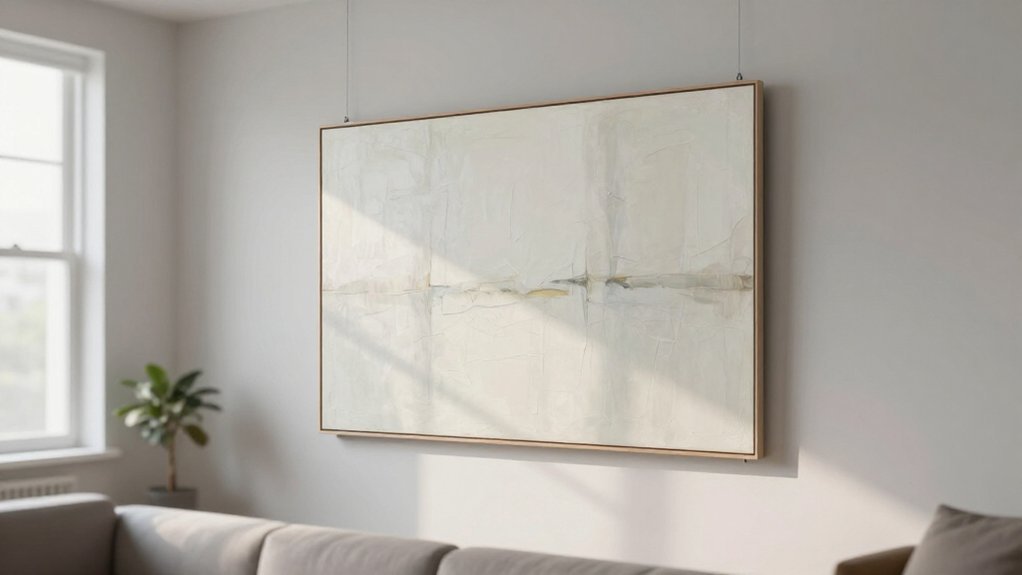
You’ve got a heavy piece of art, and you’re wondering if your wall can handle it. The truth is, most walls can, but only if you pick the right method for the weight. You’ll need to know whether you’re drilling into a stud, using a wall anchor, or choosing a rail system that holds 300 pounds. Each option has a specific load limit, installation steps, and long-term risks.
Get this choice wrong, and your frame could crash down; get it right, and you’ll never think about it again. Here’s how to make that happen.
Weigh Your Art: A 2-Minute Weight Assessment
One simple step saves you from a wall disaster later. You grab your bathroom scale and weigh your artwork for a quick weight assessment. Why bother? Because guessing leads to crashes.
Add a safety buffer of 25–50% above the actual weight, then check the load rating on your hardware. Dynamic loads shift, so you need that extra strength.
Under 10 pounds? Simple nails or wall anchors work fine. Over 10 pounds? You’ll need stronger solutions.
Here’s what your weight tells you: drywall demands heavy-duty toggles or molly bolts when studs aren’t available. For pieces hitting 50+ pounds, you plan two-point mounting with a French cleat spanning multiple studs. You verify every number, pull-test after installing, and recheck screws in 24 hours.
That 2-minute weighing protects your art and your walls.
Recommended Products

30” Cleats with hardware are ideal for hanging heavy or long items with wood frames like pictures, mirrors, and whiteboards; also perfect as a headboard wall mount; supports up to 250 pounds; designed for heavy duty mirror hangers and large picture hangers

Extremely Solid and Durable Heavy Duty Picture Hanging Kit-Including 6 Sets0.08“thickness heavy duty picture hangers hooks,heavy picture hanging hardware Comes with mounting screws and wall anchors.The two interlocking french cleat hanger for hanging mate perfectly to form a solid,It to be repeatedly installed and separated,can withstand 100lb bed, furniture frame brackets,It ensures stability and long-term use, preventing the object being installed from falling.
Find a Stud: The Strongest Mount for Heavy Frames
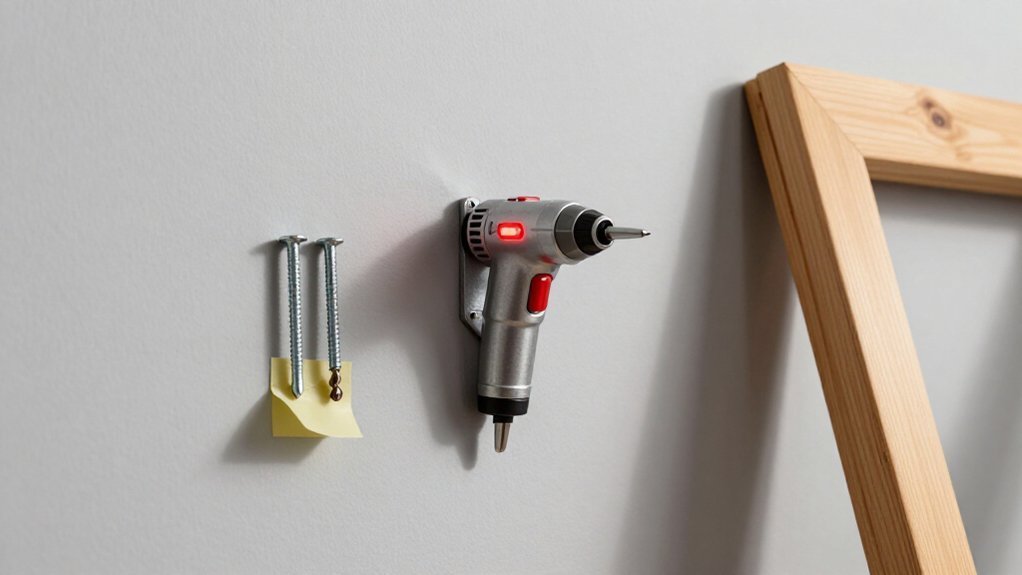
Why risk a ruined wall when you can anchor directly into solid wood? You’ll want to locate wall studs first. Grab a stud finder and slide it along the surface until it signals solid lumber behind the drywall. Now you’ve found the strongest mounting point for heavy frames.
Tap gently; hollow sounds mean empty space, while dull thuds reveal wood. For pieces under 20 pounds, a thin nail suffices. Exceeding 50 pounds? You’ll need coarse-threaded screws that bite deep. Always verify your mounting hardware exceeds the actual artwork weight by 25–50% to handle shifting or vibration.
When your layout won’t align with studs, consider a French cleat spanning multiple studs for superior load distribution. This approach eliminates reliance on wall anchors and maximizes weight capacity safely.
Recommended Products
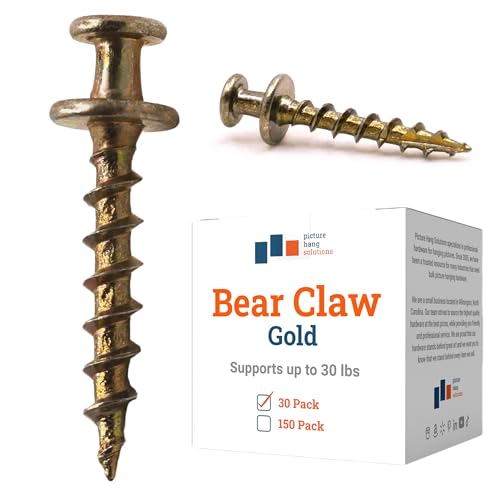
BEFORE YOU BUY: These mounting screws are designed for framed artwork and mirrors using keyhole or wire-backed hangers. Screws create a visible wall hole and are not for brick, concrete, metal studs, shelves, TVs, furniture, or structural loads.

Pack includes : 25pcs Long Bearclaw Picture Hanging Screws(Double-Head Distances 3/8 inch-10mm Bear Claw Picture Screws), 25pcs Short Double-Head Picture Hanging Screws (Double-Head Distances 3/16 inch-5.5mm Bear Claw Picture Screws).

Heavy-Duty: Each double head screw can support up to 100 lbs in wooden wall and 30 lbs in drywall, ensuring secure and reliable hanging for your artwork or decor.
No Stud Available? Anchors That Hold 20–50 Pounds
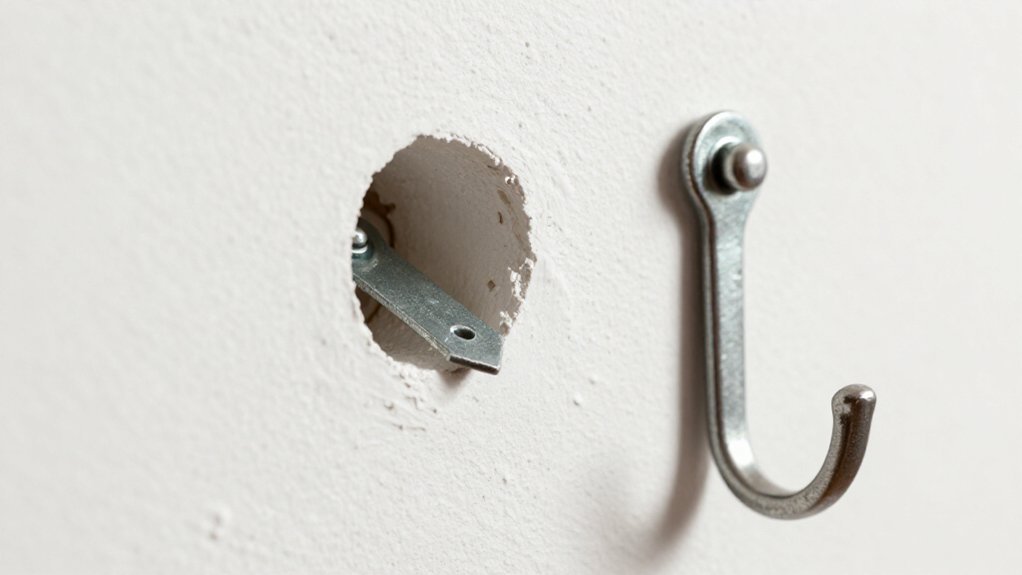
Where exactly do you turn when the stud finder stays silent? You grab heavy-duty drywall anchors or toggles rated for your load capacity.
Metal molly bolts and toggle bolts work best for standard drywall. For plaster walls, select anchors designed specifically for that surface. Each anchor distributes weight within the wall, preventing tears or pulls.
You should verify the package rating matches your frame’s weight. Check this twice. For pieces near 50 pounds, consider a French cleat spanning multiple studs or a wall rail system. These options spread force across broader areas.
Always use two-point mounting. This keeps art level and reduces sway. After securing anchors, perform a test installation. Give a firm, gentle pull. Confirm everything holds before you step back to enjoy your secure, beautiful display.
Recommended Products

MULTIPLE SIZE OPTIONS – This heavy duty toggle bolt assortment includes 3 sizes (1/8 in, 3/16 in, 1/4 in) to help you choose the appropriate size for drywall anchor applications based on wall type and intended use. Suitable for selected hanging projects such as hanging pictures, curtain rods, and plants when used correctly. Please refer to the size chart and installation guidance before use.

Toggle anchor installs behind 3/8"- to 3-5/8"-thick hollow materials including gypsum board, drywall, and concrete block to provide a secure hold from within the mounting material

Toggle bolts quantity:100pcs(25sets)1/8 inch-13pcs Toggle Bolt,13pcs Wing Nut,13pcs nuts ,13pcs spacers. 3/16 inch-8pcs Toggle Bolt,8pcs Wing Nut,8pcs nuts ,8pcs spacers. 1/4 inch-4pcs Toggle Bolt,4pcs Wing Nut,4pcs nuts ,4pcs spacers. After installation, the wall is neat and beautiful.Different sizes and enough quantities can meet your different needs in your daily life.
Skip the Wire: Direct Screw Mounts for Heavy Art
How do you keep a heavy frame from tilting forward or swaying on the wall? You skip the wire entirely and mount it directly.
This method gives your heavy frame a solid, level resting surface that eliminates the tilting common with wire hangers. Drill pilot holes, then drive two screws into studs for maximum load distribution and rock-solid stability. Position them level, attach D-rings to your frame back, and hook them onto the screws.
Two-point mounting beats a single fastener every time. It spreads weight evenly and stops sway before it starts.
Two-point mounting spreads weight evenly and stops sway before it starts—always choose it over a single fastener.
If studs aren’t available, pair your two screws with heavy-duty wall anchors rated for the load. You’ll still get that secure, flush fit that keeps your art exactly where you want it.
Recommended Products

🔩【Molly Bolts Principle】The main component of a molly bolt is a metal sleeve with expandable "wings" or legs. A screw is threaded through the sleeve. When the screw is tightened, the sleeve expands behind the wall, creating a strong anchor. The expansion of the sleeve distributes the load over a larger area, reducing the risk of the anchor pulling out.

Hollow wall anchors are designed for use in thin or hollow walls such as drywall, plasterboard, and other board materials.
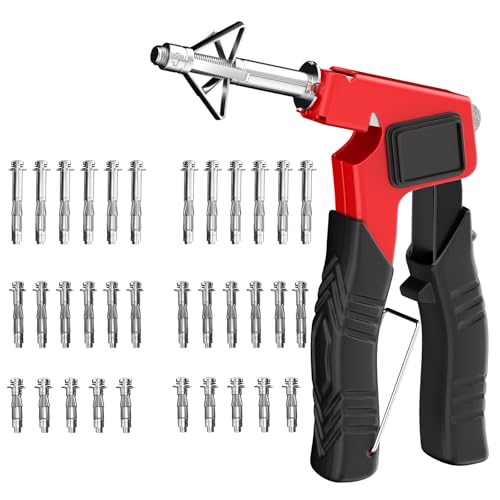
Easily solve your wall anchor installation challenges! BURMONG hollow wall anchors offer a secure and reliable installation every time! The unique expanding arm design expands outward to fit snugly against the wall backing, securing the anchor securely and preventing loosening. The internal thread structure allows for repeated installation and removal with consistent load-bearing performance.
French Cleats: Lock Your Frame in Place (and Keep It Level)
When you need a mounting system that won’t budge, French cleats deliver rock-solid stability for even your heaviest pieces. This hanging hardware uses two beveled pieces that interlock, one screw-attached to the wall and the other to your artwork’s back. You distribute weight across the full cleat length, preventing sagging.
For heavy pictures, mount French cleats directly into wall studs when possible. Spanning multiple studs eliminates tricky wall anchors and spreads load across several fasteners. Can’t hit studs? Use larger cleats to bridge hollow-wall gaps.
You’ll appreciate how this mounting system simplifies leveling. Slide your secure frame onto the wall cleat; it seats firmly and stays straight. Need to clean or rearrange? You can remove and rehang with minimal effort.
French cleats offer professional results without professional hassle.
Recommended Products

𝗕𝘂𝘆𝟮𝗼𝗿𝗠𝗼𝗿𝗲, 𝗔𝘂𝘁𝗼𝗦𝗮𝘃𝗲𝟱%✅The Perfect Choice: Whether you’re preparing for your own art exhibition, for public galleries or for creating gorgeous art displays, this picture rail hanging systemis exactly what you need for a smooth and user-friendly hanging experience!

🎨 MODERN WALL DISPLAY SYSTEM – Create a clean and organized wall display with this picture hanging system. Ideal for artwork, photo frames, posters, and home decor, this adjustable hanging rail kit helps you easily arrange and update your wall decorations.

Application : Picture hanging kit are preparing for your own art exhibition, for public galleries or for creating gorgeous art displays! This picture rail hanging systemis exactly what you need
Rail-Cable Systems: The Adjustable, Heavy-Duty Solution
You need a system that handles serious weight without limiting where you hang it, and rail-cable kits deliver exactly that with up to 300 pounds per track across drywall, plaster, brick, or wood. This surface compatibility means you’re not locked into finding studs or avoiding certain walls; instead, you secure the track properly and gain freedom to position heavy pieces wherever they look best.
Just remember to choose components rated 25–50% above your actual load so you maintain that safety margin as you adjust and rearrange over time.
Recommended Products

Versatile Mounting Solution: Heavy mirror mounting hardware features french cleat hanger heavy duty construction to support mirrors, headboards, cabinets, and whiteboards. Includes a wall cleat system and z clip hardware for secure mounting.

【Heavy Duty & Invisible Z Hanger】: This z hanger have 8 mounts to ensure your artwork on the wall more steady ( Up to 90 pounds ). And the hardware remains are concealed completely. Make your favorite decoration more beautiful, no blemish

Premium Strength Design: Aircraft grade aluminum french cleat bracket supports up to 225 lbs; perfect for hanging heavy mirrors on walls; ideal wall hangers for heavy mirrors; secure mounting solution for large artwork and cabinets
Maximum Weight Capacity
Where does an art collector turn when a single piece weighs more than a grown adult? You turn to a rail-cable kit with serious weight capacity. These systems handle up to 300 pounds per track, giving you museum-grade confidence at home.
Load distribution spreads weight across the entire track system, not one weak point. Stud reinforcement and heavy-duty wall anchors lock your secure installation into place. Drywall/plaster compatibility means you adapt without swapping hardware.
Adjustable height lets you slide pieces up or down without fresh holes. You gain peace of mind because cables stabilize heavy frames and prevent sway. For maximum safety, span multiple studs or use reinforced anchors. Your art stays put, your walls stay intact, and you keep total flexibility.
Surface Compatibility Range
Weight capacity means nothing if your hardware fights the wall itself. You’ll find that rail systems solve this problem with exceptional wall surface compatibility across drywall, plaster, brick, and wood. These tracks support up to 300 pounds per rail system, distributing force evenly to prevent damage.
For drywall, you’ll secure rails directly into studs or use reinforced anchors that spread tension across a wider area. Plaster and brick require hardware rated specifically for those densities. Always verify your anchor type matches your surface material.
You’ll achieve level, stable results through two-point mounting, which keeps heavy frames from tilting. The cables let you adjust height and position instantly without new holes. This flexibility creates a professional museum display while preserving your walls long-term. Choose components that meet or exceed your artwork’s actual weight.
Why Heavy Frames Fall (and How to Prevent It)
How often have you walked past a crooked frame or, worse, heard the crash of shattered glass from the next room? You’re witnessing the failure of inadequate support. Heavy frames fall when you’ve underestimated their true load, skipped finding studs, or trusted flimsy wall anchors with cracks already forming behind your drywall.
For 50–100 lb pieces, you’ll need serious solutions: toggle bolts rated for your load, French cleats, or rail systems that spread weight across multiple points. These create two-point mounting for levelness and sway reduction. Always choose a hanging kit with weight ratings 25–50% above your frame’s actual weight. This safety margin covers dynamic movement you can’t predict.
After installation, perform load testing. Pull gently, then recheck screws in 24 hours.
- Identify whether your wall contains studs or hollow drywall before selecting hardware
- Match your anchors to both material type and total load
- Distribute force across wide surfaces rather than single points
- Build in safety margins so small shifts don’t become disasters
Recommended Products
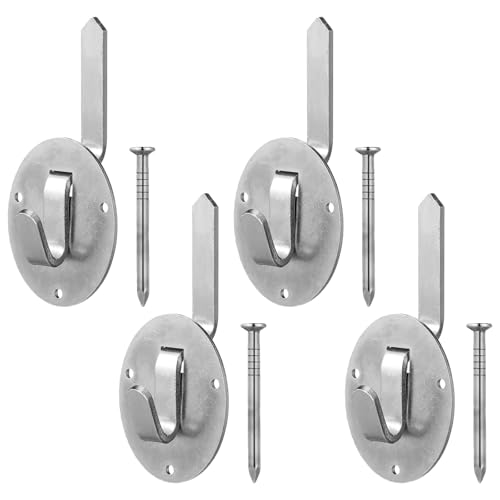
Complete Package: our comprehensive package includes 4 no stud picture hangers, 4 washers with pre-drilled holes and 12 hanger nails, all that you need; Unpacking a world of convenience and efficiency, making your picture hanging a breeze

Three Assorted Sizes for All Decor Needs - 3 lenght sizes: 14pcs of 1-3/8”=35mm, 14pcs of 1"=25mm (there two size no work for anchor), 14pcs of 1-9/16"=40mm (size as picture 2)

Ideal for heavy canvas and large frames, this heavy-duty support kit prevents wall damage with reinforced alloy hangers; no more fear of artwork falling due to weak hardware, even for items up to 30kg