
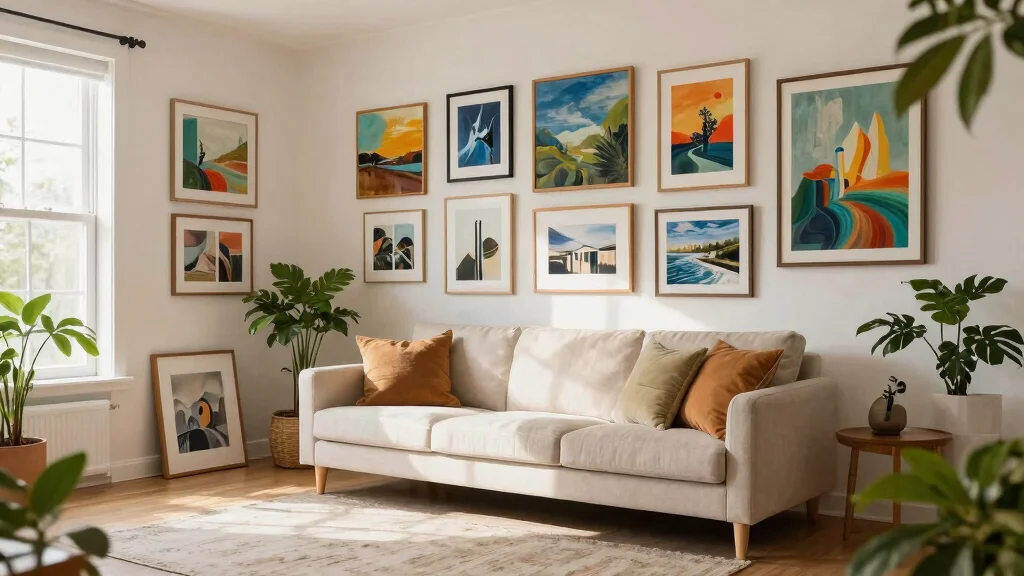
Creating a stunning wall art layout can feel like a daunting task, especially when you’re trying to showcase a collection that reflects your personality and style. Whether you’re an art aficionado or just starting your home decor journey, you probably crave a space that feels uniquely yours. That’s why I put together this guide. I want to help you take those beautiful pieces gathering dust and turn them into a captivating focal point in your home.
If you love interior design or simply enjoy surrounding yourself with inspiring visuals, this blog post is for you. You’ll find a wealth of ideas that fit various tastes and themes, whether you’re into minimalist vibes or a more eclectic approach. Each layout idea is designed to spark your creativity and give your walls a fresh, new life.
In this post, you’ll discover 11 unique wall art layout ideas to organize your collection effectively. These ideas are not only stylish but also practical, helping you transform empty walls into stunning displays that tell your story. Get ready for a treasure trove of inspiration that will make your home feel inviting and personal!
Key Takeaways
– Explore 11 unique wall art layout ideas that can revitalize your space and reflect your personal style.
– Gain insights into different arrangement techniques to create visual interest, whether you prefer symmetry or an eclectic mix.
– Discover practical tips for using color and theme to enhance your wall art collection and harmonize with your existing decor.
– Learn how to incorporate various media and sizes, ensuring your display feels balanced and engaging.
– Understand the importance of seasonal rotations to keep your artwork fresh and exciting throughout the year.
1. Symmetrical Sophistication
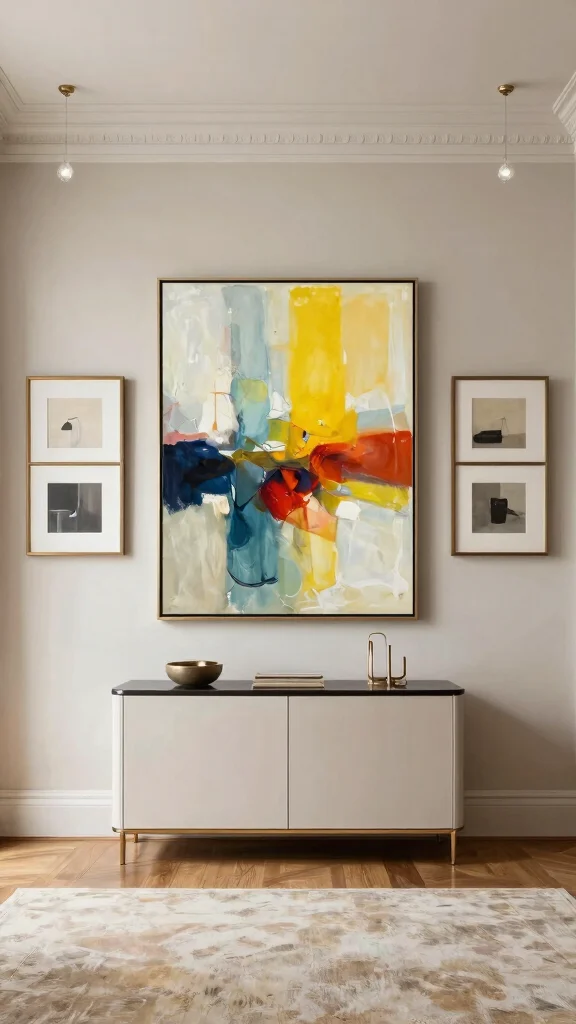
Symmetrical layouts effortlessly create a sense of balance and tranquility in your space. By positioning larger pieces at the center and surrounding them with smaller artworks, you achieve a polished and harmonious feel. Picture a stunning canvas as your focal point, with two smaller frames in complementary colors on either side, enhancing visual appeal without overwhelming the senses.
To bring this design principle to life, consider these tips:
– Choose a captivating centerpiece artwork that draws the eye.
– Use frames of varied sizes while maintaining a consistent color scheme.
– Maintain equal spacing between frames for a clean look.
– Add a stylish bench or console table beneath the display to enhance the overall aesthetic.
This layout shines brightly in formal living rooms or entryways, instantly elevating the sophistication of any setting.
2. Eclectic Gallery Wall
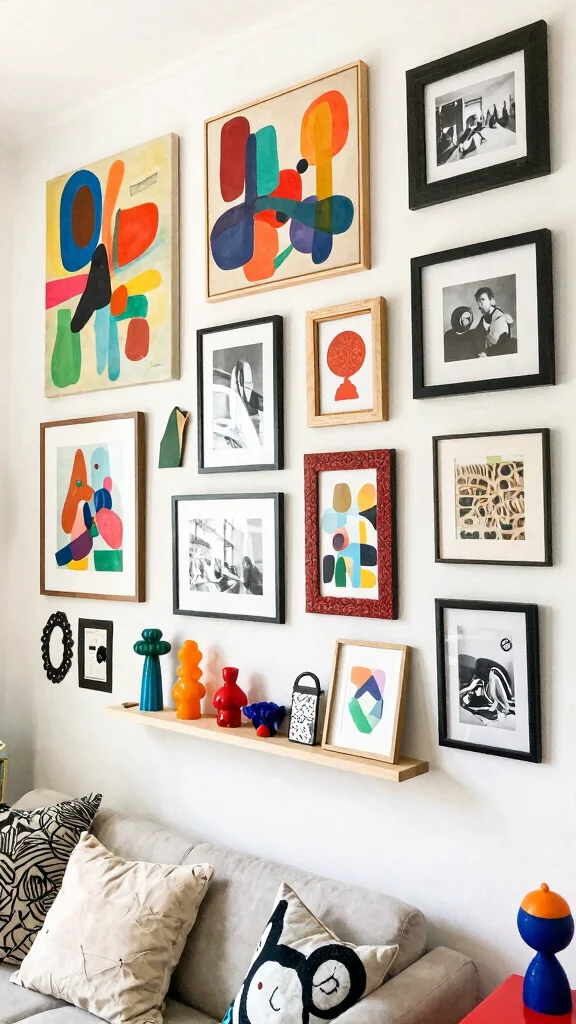
Unleash your creativity with an eclectic gallery wall that reflects your unique personality and style. This layout thrives on diversity, combining different frame styles, sizes, and art forms to create an engaging and vibrant display. Imagine a mix of colorful frames and varied art styles that come together to tell your story.
To craft your eclectic gallery wall, follow these ideas:
– Mix frame materials—wood, metal, and even colorful options.
– Incorporate a range of art forms such as photography, paintings, and textiles.
– Play with spacing to create an organic, curated feel.
– Include three-dimensional elements like small shelves or decorative objects for depth.
This approach is ideal for informal spaces like home offices and family rooms, allowing your creativity to shine through.
3. Minimalist Magic
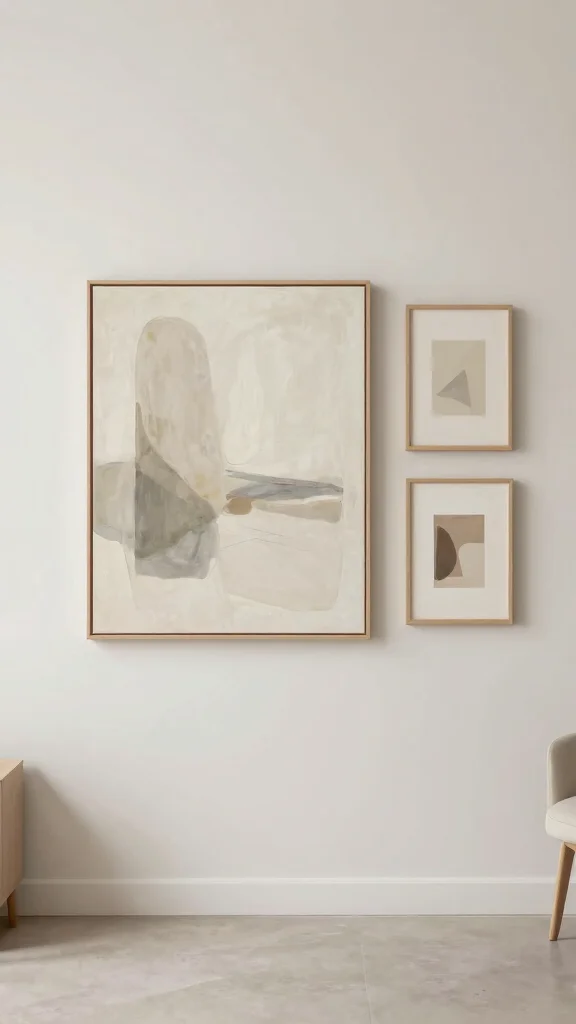
If you love simplicity, a minimalist layout offers a clean, uncluttered aesthetic that highlights impactful artworks. This style emphasizes fewer pieces, allowing each artwork to make a bold statement. Think of a few stunning pieces that resonate deeply with you, standing out against ample white space.
To achieve a minimalist wall art display, consider these steps:
– Select a small number of striking pieces that you love.
– Allow for plenty of white space around each artwork to highlight their beauty.
– Use uniform or no frames for a seamless look.
– Incorporate one large statement piece to draw attention.
Minimalist layouts work beautifully in contemporary spaces, fostering a serene atmosphere that allows the art to truly shine.
4. Color Block Layout
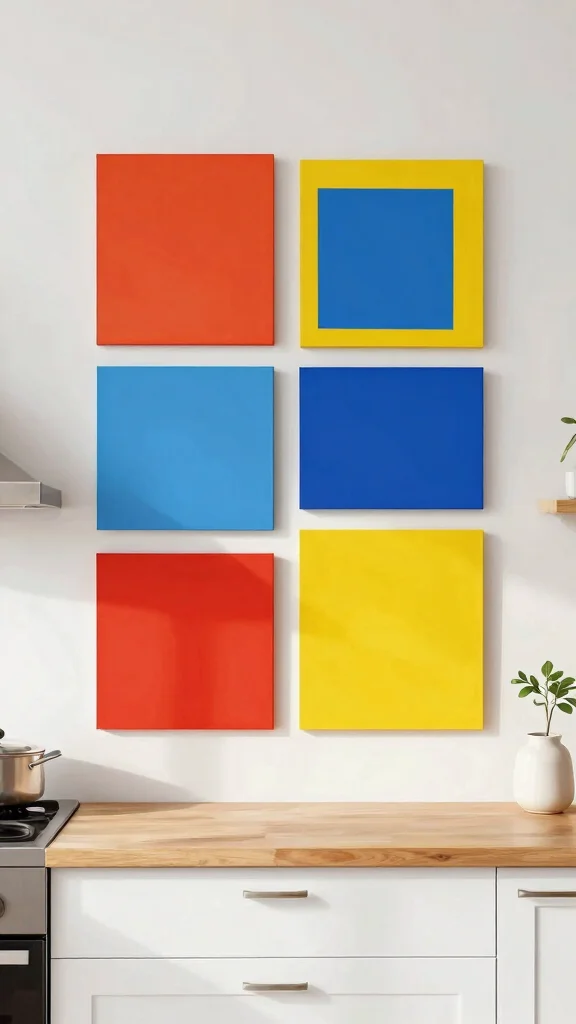
Make an eye-catching statement with a color block layout, focusing on vibrant colors and striking contrasts. By grouping artworks based on color, you create bold visual blocks that energize your space. Envision a display of warm tones or cool blues that instantly elevates the room’s mood.
Here’s how to create your color block layout:
– Start with a cohesive color palette that inspires you.
– Choose artworks that complement each other within that palette.
– Arrange the pieces in distinct rows or grids for clarity.
– Experiment with varied frame styles to keep the arrangement lively.
This style is perfect for lively spaces such as kitchens or playrooms, bringing a sense of vibrancy and energy.
Color block layout makes art feel intentional—like you’re building a story, not just hanging pieces. Start with a 3-color palette, group by hue, and your wall art layout instantly looks cohesive and energizing.
5. Themed Collections
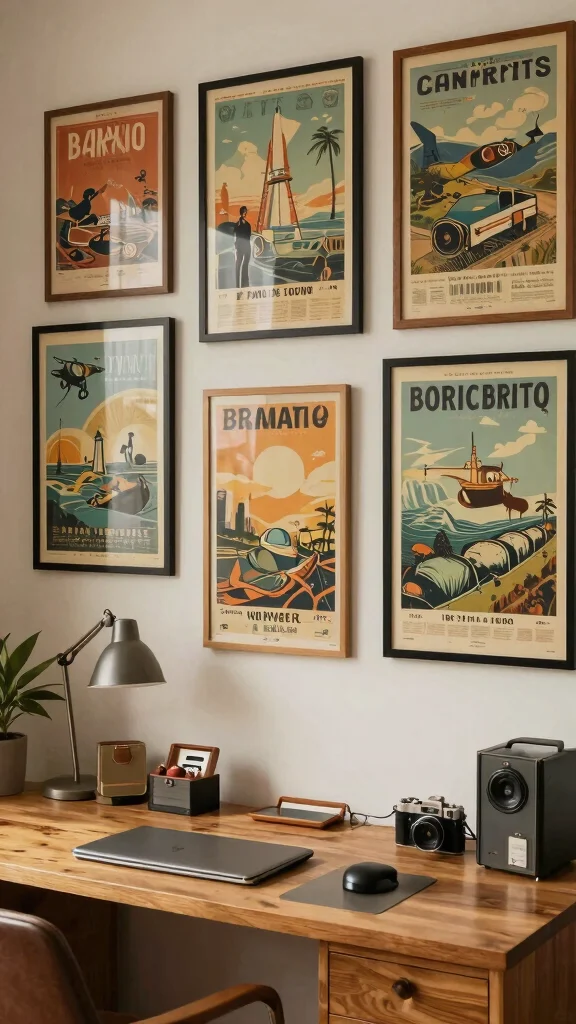
Craft a unified look with themed collections that showcase your interests and passions. Whether it’s travel, nature, or vintage finds, grouping similar pieces creates an engaging storytelling effect. Imagine a wall adorned with vintage travel posters or botanical prints that resonate with your personal journey.
To establish your themed collection, consider these tips:
– Decide on a cohesive theme that reflects your interests.
– Use consistent framing styles or colors for a harmonious appearance.
– Arrange the artwork to guide the viewer’s eye through the collection.
– Add accessories like small sculptures or books to provide context.
This approach is fantastic for personal spaces like bedrooms or home offices, offering a glimpse into your world.
6. Vertical Orientation
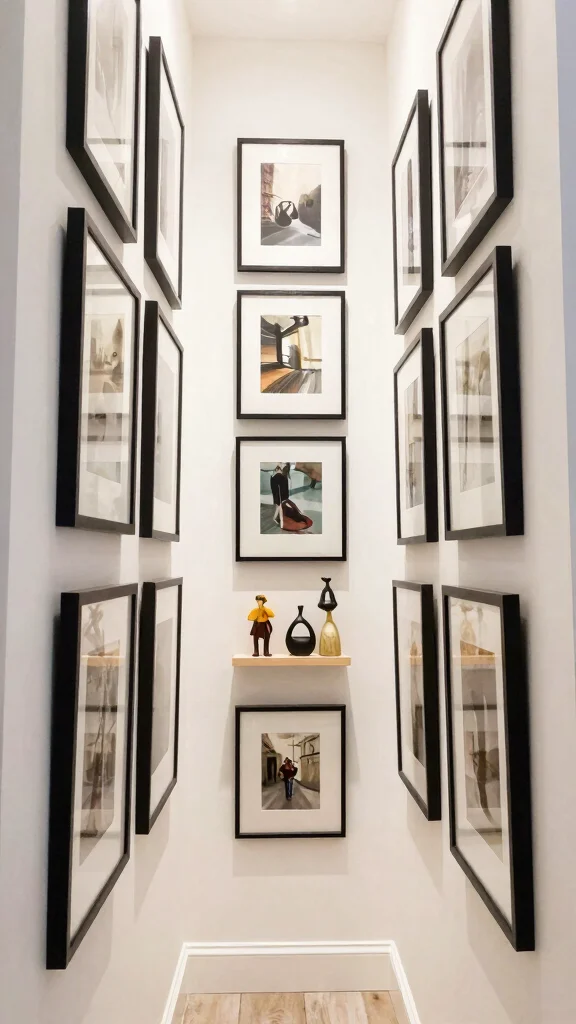
Maximize your wall space with a vertical orientation layout. This design is especially effective in smaller rooms, as it draws the eye upward, creating a sense of spaciousness. Imagine tall, narrow pieces guiding the gaze to the ceiling, making the room feel more open.
To implement this style, follow these ideas:
– Focus on taller pieces or a series of vertically arranged smaller artworks.
– Mix artwork types, such as framed pieces and wall-mounted sculptures.
– Align the tops of the artwork for a smooth flow.
– Use shelves or ledges for layering art with decorative objects.
This layout is ideal for entryways, staircases, or narrow hallways, maximizing visual impact.
7. Oversized Impact
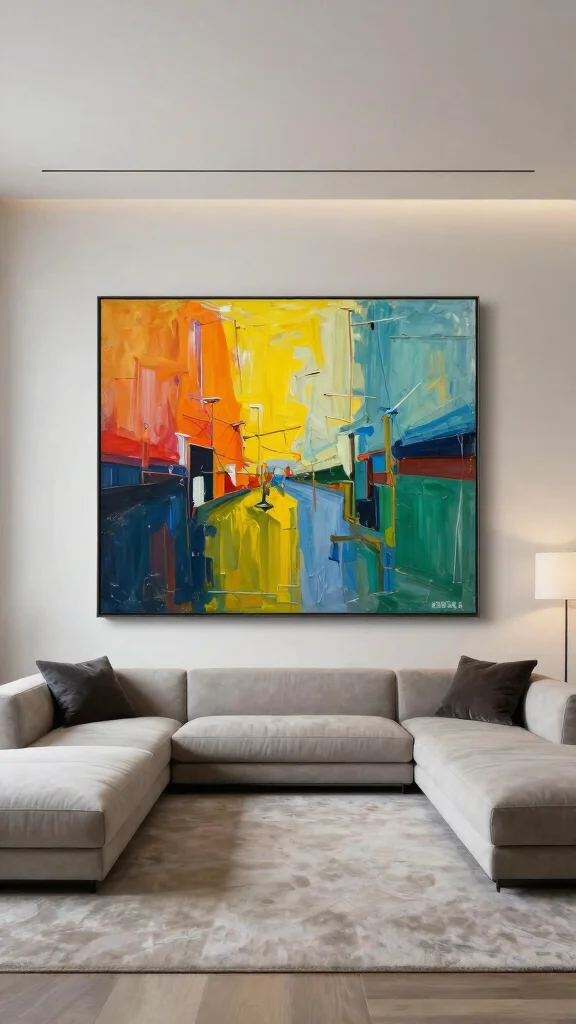
Make a bold statement with an oversized impact layout. Large artworks command attention and create a dramatic focal point in any room. This approach is especially effective in spacious areas, where smaller pieces may get lost in the decor.
To achieve this layout, consider these suggestions:
– Select one oversized piece or a few large artworks that complement each other.
– Position them on a prominent wall, such as behind a sofa or above a fireplace.
– Balance the large art with minimal furnishings to avoid crowding.
– Use lighting to highlight the artwork, creating a gallery-like atmosphere.
This style is ideal for formal dining rooms, living areas, or any space that benefits from a striking visual statement.
How To Choose the Right Wall Art Layout
Choosing the perfect wall art layout can transform your living space into a personal gallery. It’s essential to consider several factors to ensure that your collection looks cohesive and inviting. Here are some key selection criteria to help you decide on the right wall art arrangement for your home.
1. Assess Your Space
Before you start hanging art, look at the wall where you want to create your gallery. Measure the width and height of the wall to determine how much space you have. If the wall is large, you can use bigger art pieces or a larger arrangement. For smaller walls, consider a few smaller pieces that complement each other.
2. Consider Your Style
Take a moment to think about your personal style and the overall aesthetic of your home. Do you prefer modern, rustic, or bohemian styles? Selecting pieces that match your decor will create a unified look. If you have a contemporary home, sleek frames and minimalist art can work well. For a more eclectic vibe, mix various styles and colors.
3. Choose a Focal Point
Every gallery wall needs a focal point. This could be an oversized artwork or a unique piece that captures attention. Position this central piece slightly higher than eye level, as people’s eyes naturally gravitate towards it. Once you have a focal point, build your layout around it.
4. Think About Color Schemes
Color plays a vital role in the overall feel of your space. Choose a color palette that complements your walls and furniture. You can create a monochromatic look with similar tones or add pops of color for a lively contrast. If you’re unsure, start with neutral artwork and incorporate colorful pieces gradually.
5. Experiment with Layouts
Before hanging pieces, lay them out on the floor or use paper templates on the wall to visualize different arrangements. Consider various layouts such as symmetrical, asymmetrical, or even themed collections. Try different heights and spacing to see what feels right for your space. Don’t hesitate to mix framed and unframed art for added interest.
6. Keep Your Budget in Mind
Art can vary significantly in price, so establish a budget before you start shopping. Look for affordable prints, DIY options, or even swap art with friends. You can also frame your own photos or make a collage from smaller pieces to save money.
Pro Tip: Don’t rush the process! Take your time to select pieces that resonate with you. The right wall art layout should reflect your personality and make you feel at home.
By following these guidelines, you’ll create a stunning wall art arrangement that not only beautifies your space but also tells your personal story. Happy decorating!
8. Mixed Media Display
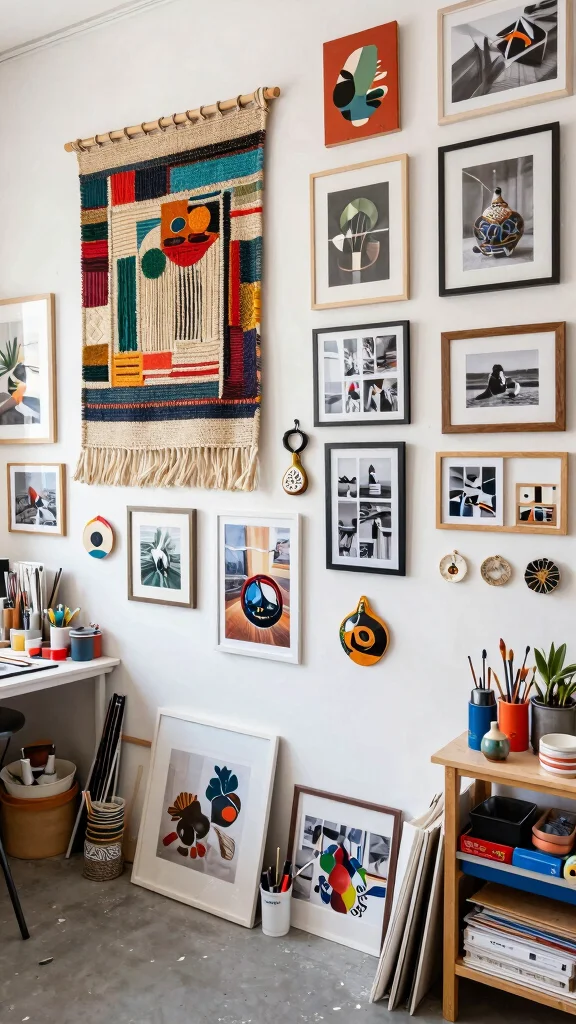
Explore your creativity with a mixed media display, combining various art forms like paintings, photographs, and textiles to create a rich, textured wall. This layout excites the senses, inviting curiosity and engagement. Imagine a tapestry woven among framed art, bringing depth and intrigue to your space.
To create your mixed media display, consider these tips:
– Choose a variety of art forms, such as woven pieces and framed works.
– Arrange them for visual interest—overlapping or varying heights can create excitement.
– Use a consistent color palette to unify the display.
– Incorporate natural materials like wood, metal, or fabric for added texture.
This layout shines in creative spaces like art studios or vibrant family rooms.
Fun fact: Mixing textiles and framed art boosts perceived texture by 30% in a mixed media display for a wall art layout. It only takes one standout piece to anchor the wall, while playful layers invite touch and curiosity.
9. Floating Shelves Showcase
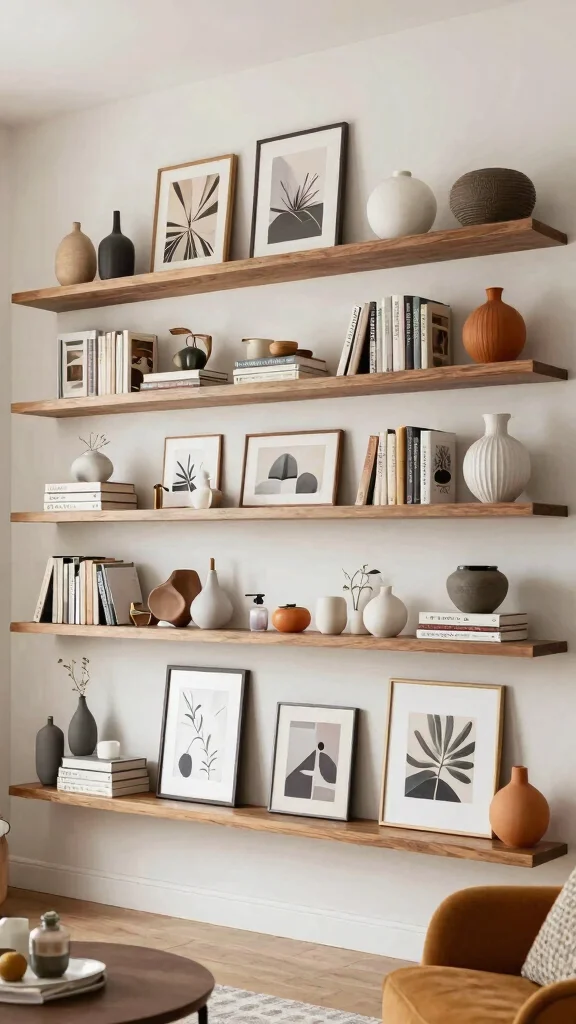
Introduce dimension and functionality with a floating shelves showcase. This layout allows for the display of both art and decorative objects, striking a balance between style and practicality. Picture shelves adorned with framed art alongside cherished trinkets, creating a personalized gallery.
To create your floating shelves layout, follow these suggestions:
– Install shelves at different heights on your wall.
– Mix framed artworks with decorative items like vases and books.
– Layer smaller pieces in front of larger ones for depth.
– Ensure shelves are securely mounted for safety.
This approach works beautifully in casual spaces like living rooms, home offices, or kitchens, offering versatility in your display.
Fun fact: A floating shelves showcase can boost perceived space by up to 15% when you vary heights and mix art with trinkets. It turns a wall art layout into a living, practical gallery—proof that style and function can happily coexist.
10. Asymmetrical Art Arrangement
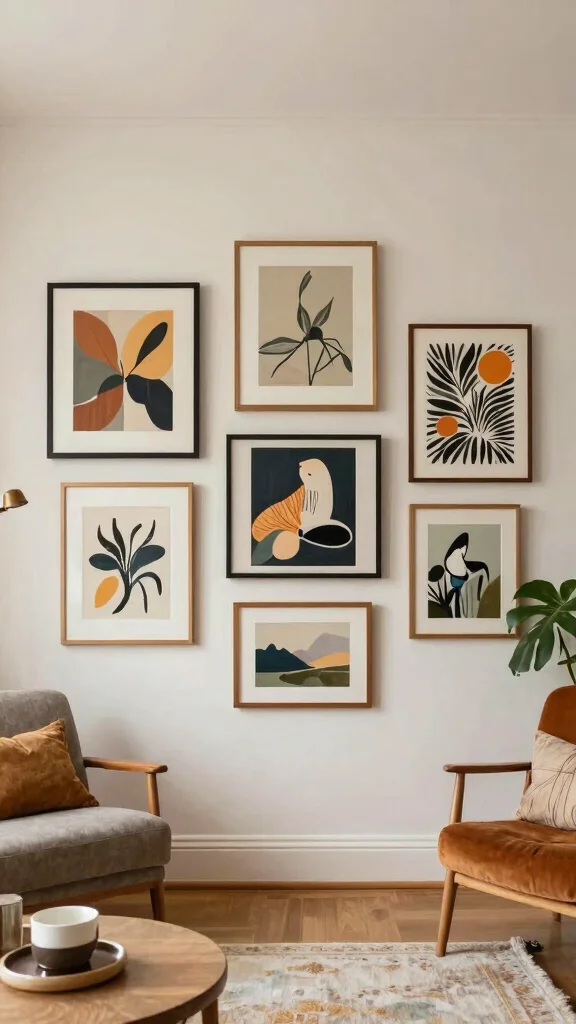
Break the mold with an asymmetrical art arrangement. This layout creates balance in a playful and unexpected way, adding flair to your walls. Imagine a variety of artwork sizes and styles coming together in a visually pleasing yet seemingly random layout that still feels harmonious.
To achieve an asymmetrical look, keep these tips in mind:
– Choose a diverse range of artwork sizes and styles.
– Arrange them in a way that feels balanced but spontaneous.
– Use tape or paper cutouts to plan your layout before hanging.
– Incorporate negative space to highlight individual pieces.
This fun and creative style is perfect for relaxed areas like living rooms or craft rooms, showcasing your artistic spirit.
11. Seasonal Rotations
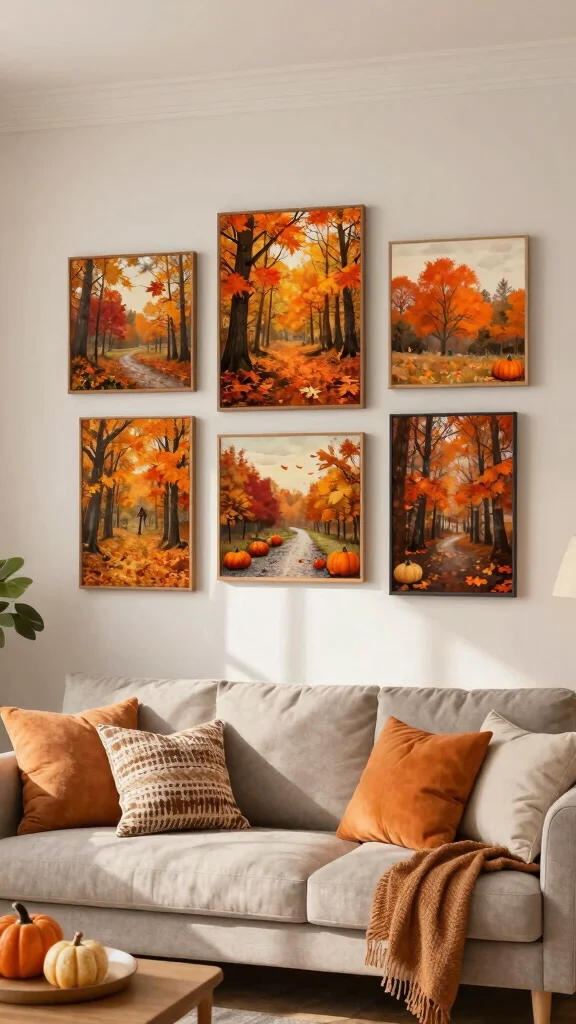
Keep your home feeling fresh and dynamic with seasonal rotations. This concept encourages you to switch out your artwork based on the seasons, allowing your decor to evolve throughout the year. Imagine bright, cheerful pieces in the summer, transitioning to warm, cozy hues in the fall.
To implement seasonal rotations, consider these strategies:
– Designate a specific area for seasonal art, like a small gallery wall.
– Select artworks that resonate with each season’s colors and themes.
– Store off-season pieces safely to rotate them in when the time comes.
– Integrate seasonal accessories like decorative cushions to complete the look.
This approach is perfect for those who enjoy changing their decor and keeping their space exciting!
Conclusion
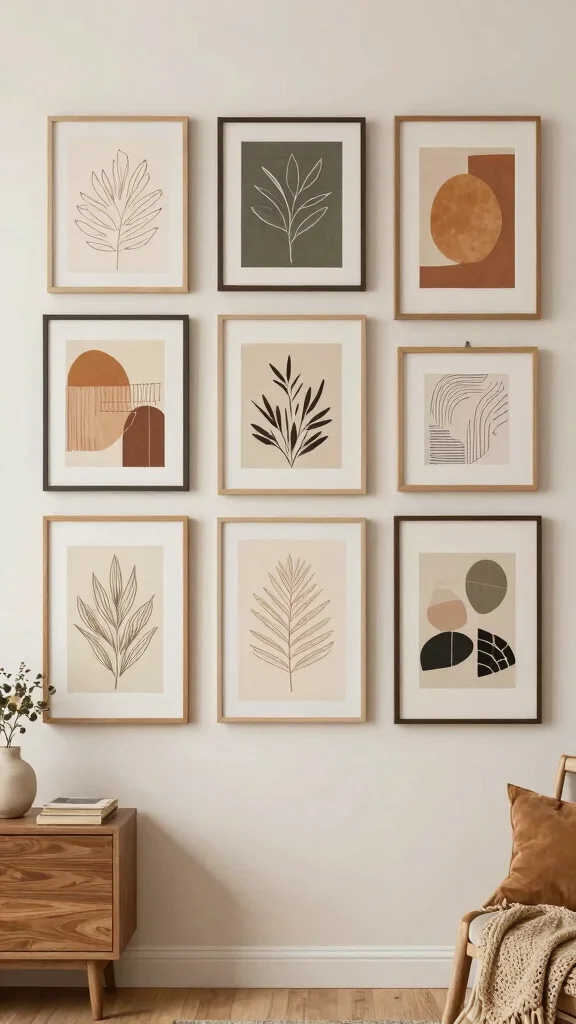
Choosing the right wall art layout can completely transform the energy and character of your home. Each of these 11 ideas offers a unique way to express your style and personality while enhancing your space’s aesthetics. Don’t hesitate to mix and match these suggestions to create a gallery wall that’s a true reflection of you!
Remember, the best part about art is how it connects and resonates with us. So go ahead and curate a display that sparks joy!
Note: We aim to provide accurate product links, but some may occasionally expire or become unavailable. If this happens, please search directly on Amazon for the product or a suitable alternative.
This post contains Amazon affiliate links, meaning we may earn a small commission if you purchase through our links, at no extra cost to you.
Frequently Asked Questions
What exactly is a wall art layout and how do I start a gallery wall from scratch?
A wall art layout is the spatial plan that defines how your pieces relate to each other on a wall, including size, shape, and spacing. It helps your collection look intentional rather than random. To start a wall art layout and build a gallery wall, try these steps: first audit your art, photos, and canvases; second pick an anchor piece to be the focal point; third decide on an arrangement style (grid, salon-style, or a loose organic layout).
Then create paper templates the size of each frame and test them on the floor or on the wall with painter’s tape to visualize spacing; next measure spacing between frames (2–4 inches for small pieces, 4–8 inches for larger works) and adjust; finally mount the hardware, hang, and adjust lighting until the layout feels balanced and cohesive.
How many pieces should a gallery wall have and how should I space them for a balanced wall art arrangement?
A great starting point is to tailor the number of pieces to the wall size: 3–5 for a small wall, 6–9 for a medium wall, and 10+ for a large statement wall. Use one anchor piece at eye level (roughly 57–60 inches from the floor) and arrange the rest around it in a grid, salon-style cluster, or a deliberate, loose layout. Space between frames typically ranges from 2–3 inches for a tighter look to 3–6 inches for a more breathing room feel; for very large pieces, you can go up to 6–8 inches. Always test with paper templates before you drill any holes to ensure a balanced wall art arrangement.
What are practical wall art layout ideas for small spaces or awkward walls?
For tight spots, think vertical or compact grids that draw the eye upward. Try a tall, narrow arrangement, or pair one large statement piece with two smaller ones below it. If the wall is irregular, create a salon-style cluster that can adapt to the shape, or install slim floating shelves to rotate pieces without re-hanging. Start with paper templates to visualize scale and alignment, then tweak spacing and matting until the composition feels cohesive and intentionally designed. These gallery wall ideas work wonders for small spaces and awkward walls.
What common mistakes should I avoid in gallery wall ideas and how can I fix them?
Common pitfalls include mis-sized frames, uneven alignment, and inconsistent spacing that makes the wall look chaotic. Also avoid mixing too many frame styles without a unifying element, ignoring wall color or lighting, and neglecting proper hanging hardware. Fixes: lay out the entire design with paper templates, stick to a unifying mat color or frame tone, use a level to keep lines true, ensure consistent spacing (or intentionally vary spacing for a dynamic look), and test lighting—add picture lights or adjustable lamps to highlight the art. A thoughtful approach will turn these issues into a polished wall art layout.
How can I use art display techniques to mix prints, photos, and canvases in a gallery wall while keeping cohesive interior design tips?
Start with a harmonious color palette that appears across frames and mats, then vary sizes and orientations to create visual interest. Keep a central anchor piece and group smaller items around it in a deliberate grid or curated cluster. Use art display techniques like consistent mat widths and a unified frame finish to tie diverse media together, while letting the different media (prints, photos, canvases) add texture. Maintain equal spacing and alignment along a central axis, and ensure the overall wall feels balanced with the room’s furniture and lighting. This approach delivers strong interior design tips and stylish gallery wall ideas.
Related Topics
home decor
gallery wall ideas
wall art arrangement
art display techniques
interior design tips
minimalist design
vintage style
easy layout
beginner friendly
creative displays
seasonal decor
color coordination