
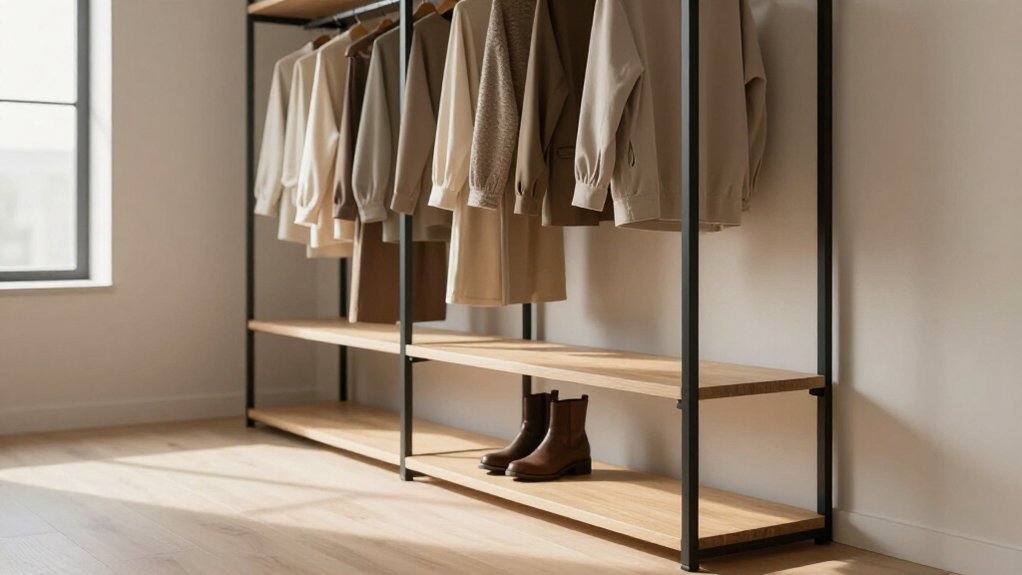
Morning light spills across your outfits, and you pause at a threshold: one path leads to a hidden retreat where storage disappears behind closed doors, the other to an open gallery where clothes hang like art in a boutique. You are choosing between a dressing room and a walk-in closet, but the labels blur until you understand what actually changes your daily routine.
Five practical differences will guide you toward the right fit for your space, habits, and budget. You will discover why privacy, layout, speed, storage style, and cost matter more than square footage alone. The answer is not about luxury; it is about how you want to feel when you get dressed.
Dressing Room vs. Walk-in Closet: What the Labels Really Mean
Why does the same space get called a dressing room in one home and a walk-in closet in another? You’re looking at two distinct concepts that share square footage but serve different purposes.
A dressing room offers private retreat with concealed storage, while a walk-in closet displays your wardrobe for quick selection—same space, entirely different purpose.
A dressing room gives you a private dressing experience. You’ll find closed storage hiding your belongings, plus furniture like seating and mirrors. Built-in storage sits behind doors, creating that clean, retreat-like feel you want for grooming.
A walk-in closet operates differently. You get open shelving from wall to wall, maximizing closet visibility. Your clothes stay on display for quick outfit selection, like browsing a boutique.
The labels matter because they signal function. When you want concealment and comfort, you choose a dressing room. When you prioritize speed and panoramic views of your wardrobe, you pick a walk-in closet.
Recommended Products

【 Ajustable Brightness & 3 Colors Lighting Modes 】- The LED brightness of this hollywood lighted makeup mirror can be changed as you need. This LED makeup mirror provides 3 colors lighting modes so that you can also adjust different brightness to meet your different makeup needs, no matter it is early morning or late night.
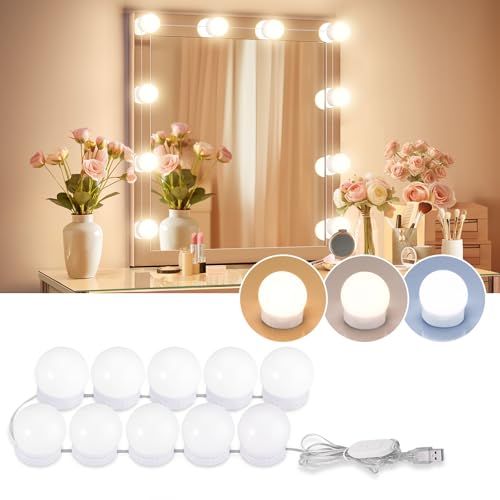
3 Color Tunable : Short press the button to choose the desired color temperature: Warm White (3000K) / Cool White (4000K) / Daylight (6500K). With 120 degree beam angle and sphere PC lampshade, our LED bulbs illuminates an even glow in any room of your choice
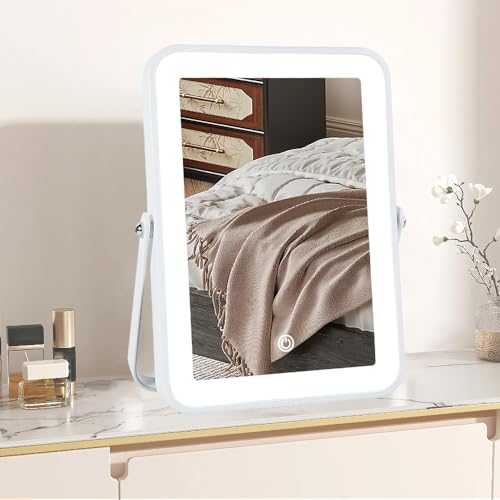
Note: Use the included USB-Type C cable only, other cables may damage the mirror's performance.
Which One Fits Your Home? A Quick Decision Framework
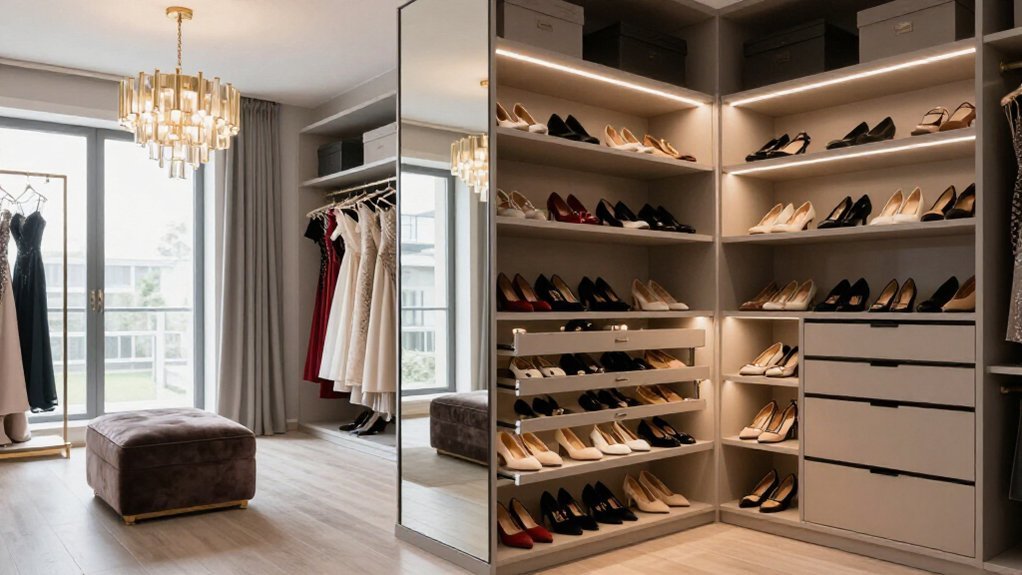
How do you decide between these two spaces when you’re staring at your floor plan? Start by measuring your available footprint. A walk-in wardrobe fits compact areas starting around 4×5 feet, though 6×8 feet gives you proper storage solutions on three walls plus movement room. If you’ve got more space, a dressing room lets you add islands, seating, and vanity areas for grooming.
Next, weigh your privacy needs. Walk-ins typically go door-free, offering panoramic visibility and quick access to everything at once. Dressing rooms conceal your items behind doors, creating a secluded, comfortable experience.
Consider your daily routine. Do you want boutique-style display and space efficiency, or do you prefer a dedicated layout design with grooming zones and décor?
Finally, match your choice to your home. Smaller homes benefit from bedroom-integrated walk-in wardrobes. Master suites work well with separate dressing rooms that increase personalization and comfort.
Recommended Products

Unique Trapezoid Design: Our closet bins feature a unique trapezoid design with a lower front for easier visibility and access. The Homsorout shelf organizers now come in 10 new colours, offering more options for your space

SIMPLE & FUNCTIONAL DESIGN: This closet organizer and storage features a 3-tier layout with reversible assembly, making it an ideal storage solution for bedrooms, closets, or entryways

【Wood Closet System with 4 Drawers】 With 4 wooden drawers which are durable, unlike other’s fabric drawers that are easily damaged and difficult to clean.Perfect for stashing your personal belongings, underwear or socks.The drawers can also stack some T-shirts. The metal drawer handles are more exquisite. The drawers are easy to open with smooth sliders.
Space and Seating: How Much Room Each Option Needs
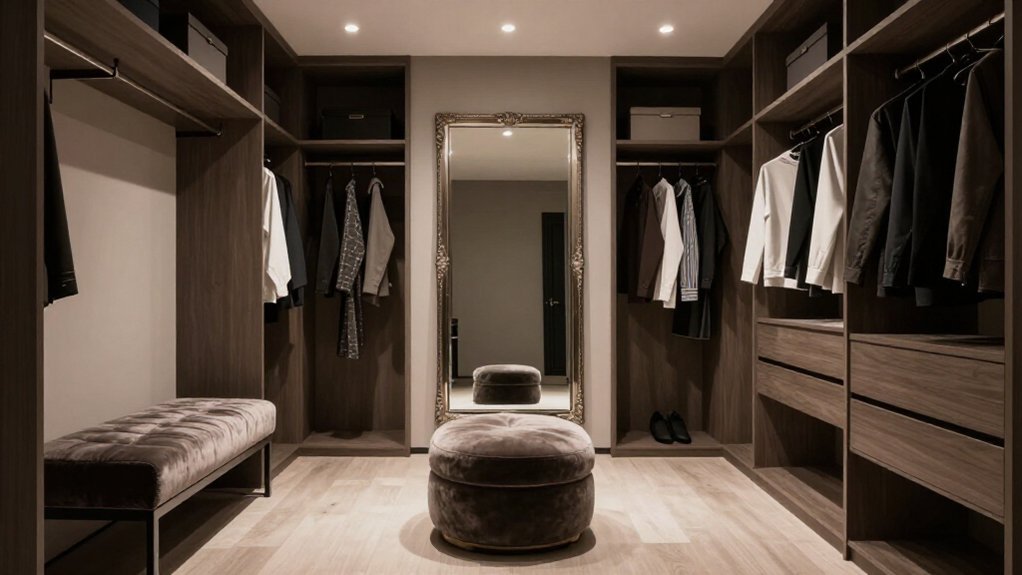
Now that you’ve got a framework for choosing between these spaces, let’s look at what you’ll actually need to build one.
A walk-in closet can work with a minimal footprint as small as 4 × 5 feet, using three-walled storage and clear circulation space for movement and access. You won’t fit seating here; the priority is efficient, open storage.
A dressing room demands more. You’ll need extra square footage for islands, built-in tables, and comfortable seating like a bench or small sofa. This isn’t just storage; it’s a private retreat with room to sit, dress, and relax.
Space planning matters in both. Walk-ins maximize wall-to-wall organization, while dressing rooms allocate space for furniture and task areas.
Consider your footprint comparison realistically. In smaller homes, a walk-in closet integrates easily with minimal addition, but a dressing room needs spare room to feel right. Plan your circulation space first, and you’ll know which option fits.
Recommended Products

Ample Storage Space: Our over door organizer boasts a spacious 42.5”x13.8”x5.5” dimensions, featuring 4 roomy inner pockets and 6 mesh side pockets, suitable for keeping all your essentials neatly arranged and easily accessible

Maximize Door Space Utilization: This 5 section over the door organizer features dimensions of 14.9"×6.5"×51.6"(38cm×16.5cm×131cm) with five large window pockets and four side pockets to efficiently use the storage space behind your door (1.4"-1.8" thick)

Open or Hidden Storage: Layout Styles Compared
Where you store your clothes matters just as much as how much space you’ve got. Your choice between a walk-in closet and dressing room hinges on whether you prefer open storage or hidden storage layout styles.
Consider what each approach offers:
- Walk-in closets give you immediate visibility to every item without opening doors
- Dressing rooms conceal belongings behind cabinet fronts for a polished appearance
- Open storage supports faster morning routines through panoramic accessibility
- Hidden storage lets you stash seasonal pieces and maintain tidiness with less work
- Your upkeep commitment differs: open spaces demand constant neatness, while closed doors forgive temporary clutter
Both options typically include wall-to-wall shelving and hanging rails. Walk-ins emphasize accessibility and quick outfit assembly. Dressing rooms prioritize concealment and privacy. Your lifestyle, daily schedule, and tolerance for visible organization determine which storage philosophy serves you better.
Recommended Products

2 IN 1 COSMETIC JEWELRY CABINET: This GISSAR jewelry cabinet is made of quality solid MDF, suitable for long-term use. The full-length mirror offers a head-to-toe view of your outfit, large storage capacity to help you easily choose the right jewelry and cosmetics, with lock and key safely storage

Fashion Wardrobe with Mirror: Our wardrobe closet comes with large mirror and crystal knobs, allowing you to have a full view of yourself and add an elegant & noble charm to your bedroom.

All-in-One Functionality: Transform your space with this 3-in-1 vanity set! Whether you need a bedside table, a stylish makeup station, or a compact work desk, this versatile piece adapts effortlessly to your needs.
Budget Breakdown: Dressing Room Costs vs. Walk-in Closet Prices
What’s driving your renovation budget: the square footage you’re working with or the level of finish you’re after? You’ll find that a walk-in closet typically costs more than a dressing room due to its larger footprint and open layout.
Your walk-in closet price climbs with features like islands, seating, and full-length mirrors, plus extra installation labor for three-dimensional space and circulation areas.
Meanwhile, you save with a dressing room by concealing storage behind doors and using existing room space; your expenses focus on seating, vanity tables, and integrated cabinetry.
A basic wardrobe wall starts at a few thousand dollars, but custom finishes from Italian designers or custom manufacturers can push either option into tens of thousands. Regional markets, like California, also shift your final numbers significantly.
Recommended Products

Custom 96" Walk-In Closet with Hidden Drawers — Sized at 96"L x 16"D x 75"H, this wall-mounted system adjusts to fit 4–8FT spaces, creating a built-in walk-in look. Features 3 wooden drawers for hidden storage, smooth-glide rails, and leather handles for a refined furniture finish.

MATERIAL -The runner rugs is made of high-density polyester, water-resistant, stain-resistant, no shed hair, soundproof and easy to clean & maintain. The carpet surface is smooth, flat and thick. No trace when folded, comfortable to walk on.

Custom 96" Walk-In Closet with Hidden Drawers — Sized at 96"W x 16"D x 75"H, this wall-mounted system adjusts to fit 4–8FT spaces, creating a built-in walk-in look. Features 3 wooden drawers for hidden storage, smooth-glide rails, and leather handles for a refined furniture finish.